Shafeen Alam
Unifying four security products into one adaptive control plane
After BlackBerry acquired Cylance, its cybersecurity portfolio ran as powerful but disconnected systems, and analysts moved between consoles to correlate signals across endpoints, policies, and incidents. I led the UX architecture transformation that unified endpoint protection, detection and response, device management, and Zero Trust access into a single adaptive platform. This was not a UI redesign. It was a platform-level systems unification.
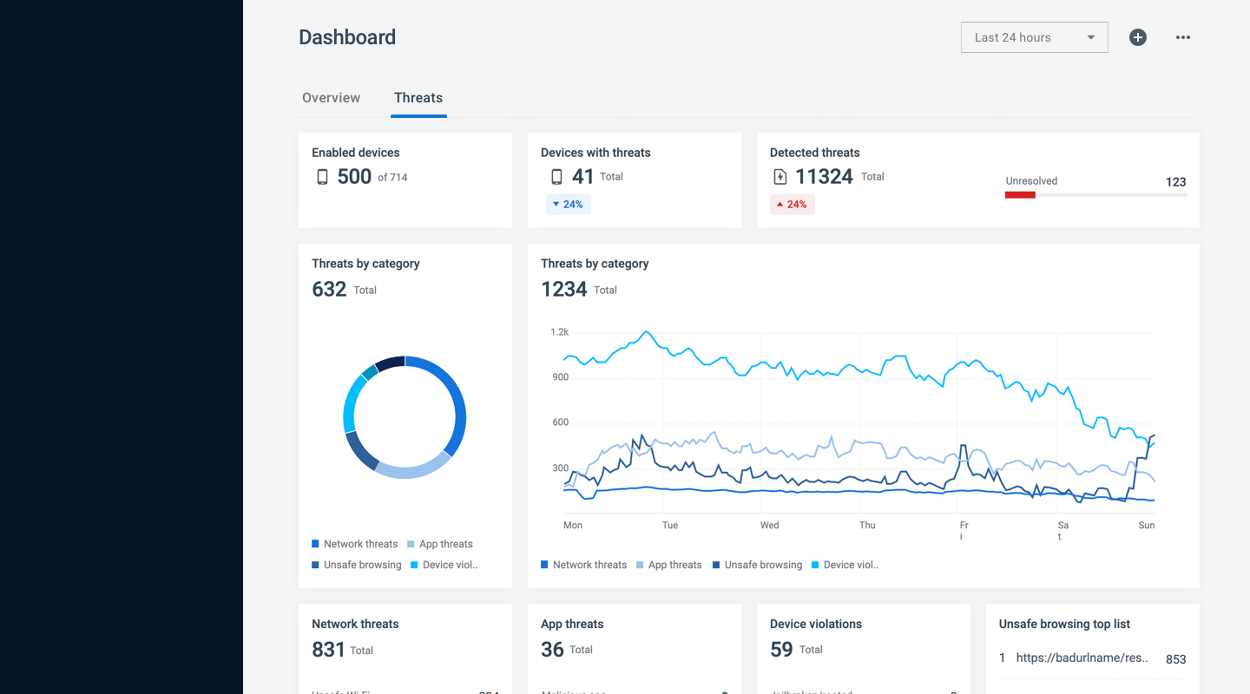
Every console switch cost analysts time and context while they tried to connect a single incident.
60-second read
After BlackBerry acquired Cylance, the portfolio ran as powerful but disconnected consoles. Analysts moved between them to correlate signals across endpoints, policies, and incidents.
Align the underlying information model before designing any surface. One incident and asset abstraction, then governed dashboard infrastructure on top of it.
Led the UX architecture translation: data abstraction layer, cross-product navigation, micro-frontend alignment, widget governance, and the investigation model.
37% faster mean time to detect in pilot. 28% fewer duplicate triages. 3× dashboard engagement.
01 · Shipped
A single console over four acquired products, governed dashboard infrastructure, role-based provisioning, AI-clustered incident modeling, and a two-mode investigation surface.
02 · Vision to
architecture
The mandate arrived as one sentence from leadership. My job was turning it into a system.
“Single console. One place to understand risk.”
Translating that meant a unified data abstraction layer, a cross-product navigation architecture, micro-frontend alignment with engineering, and a UX system that could hold several security domains at once. That work became the foundation of the Unified Endpoint Security platform.
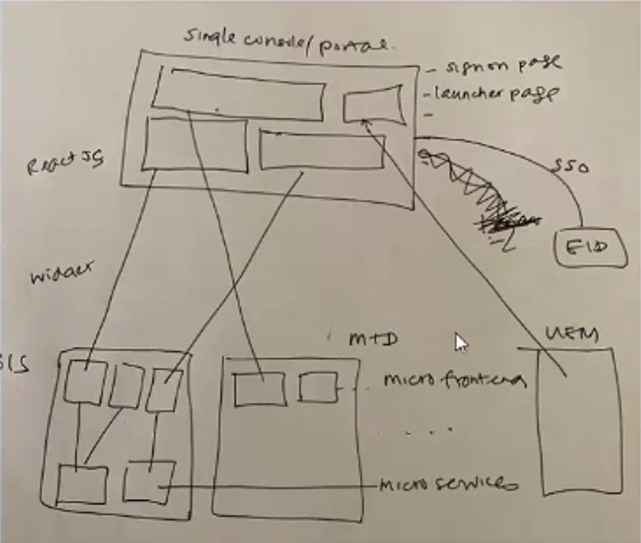
03 · Diagnosing fragmentation
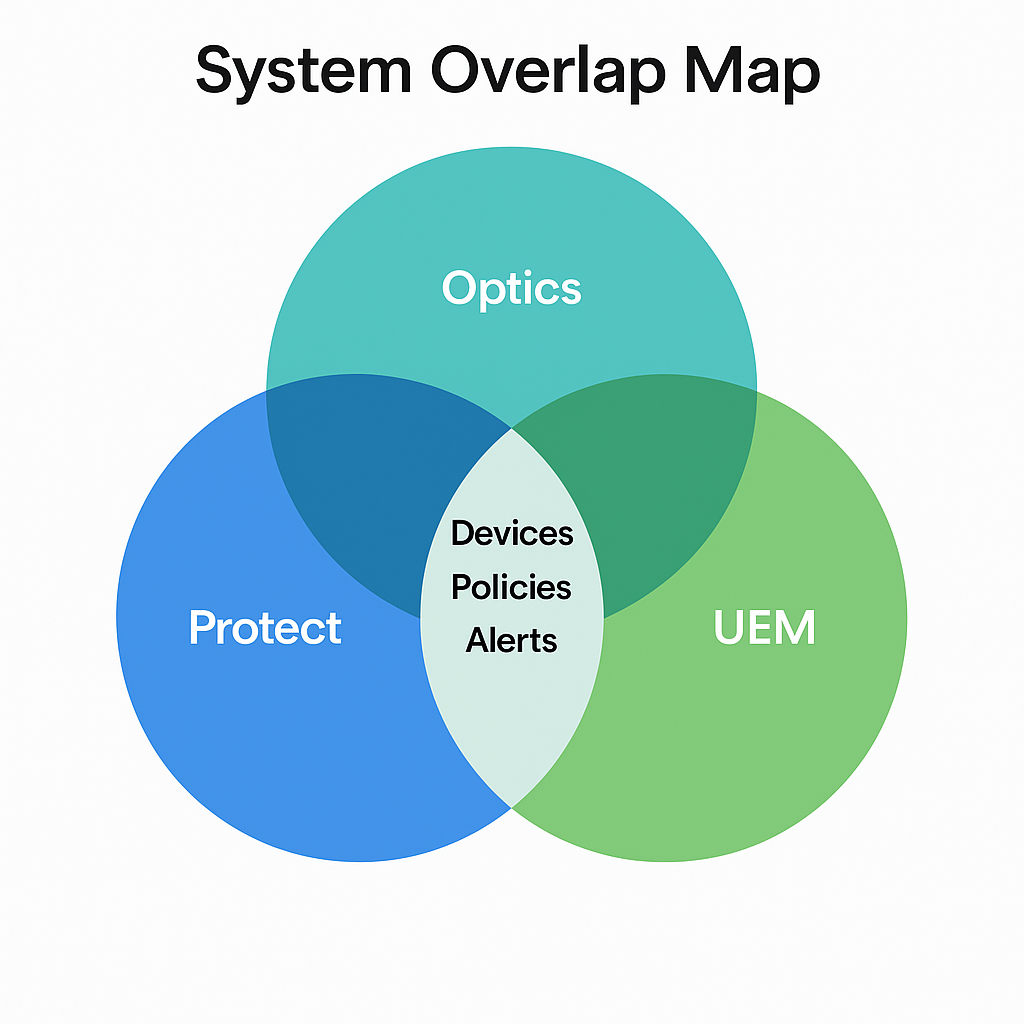
CylancePROTECT, CylanceOPTICS, and BlackBerry UEM each surfaced devices, policies, and alerts. Each also maintained its own schema, dashboards, and workflows for them, so the same three concepts existed three times with three definitions.
This is why the work started underneath the interface. Before designing any new surface, we aligned the information model, because navigation cannot reconcile schemas that disagree.
Duplicate triage work
The same alert investigated twice because two consoles surfaced it.
Conflicting mental models
A device meant something different depending on which product you opened.
Rising mean time to detect
Correlation happened in the analyst's head, so it happened slowly.
Alert fatigue
Volume without consolidation trains people to stop looking.
04 · The unified control plane
We consolidated CylancePROTECT, CylanceOPTICS, BlackBerry UEM, and CylanceGATEWAY into a shared incident and asset abstraction. Four products stopped being four products.
- One login, one console
- Correlated endpoint, network, and identity signals
- A standardized navigation model across legacy surfaces
- A cohesive design system spanning four acquired products
That consolidation is what positioned BlackBerry to compete in extended detection and response, where the whole premise is correlation across domains.
05 · Exposure over alerts
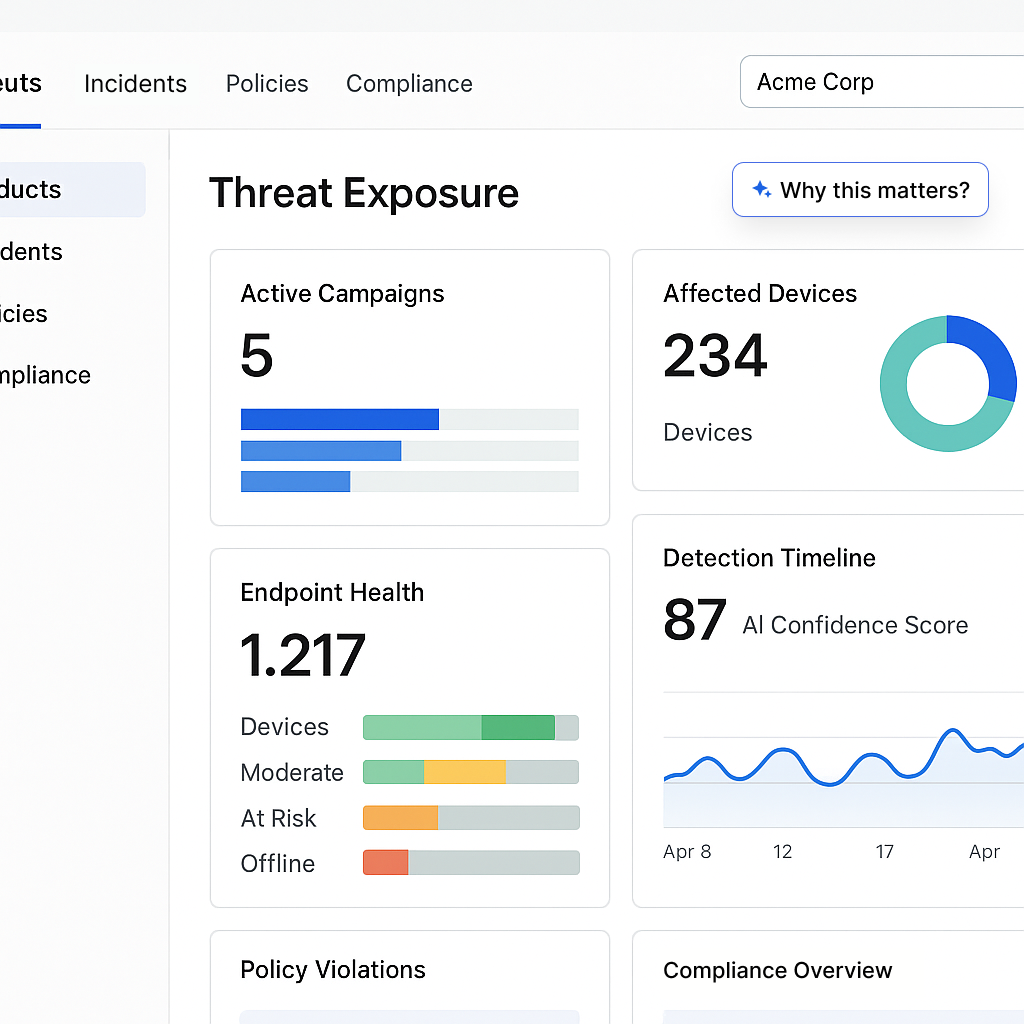
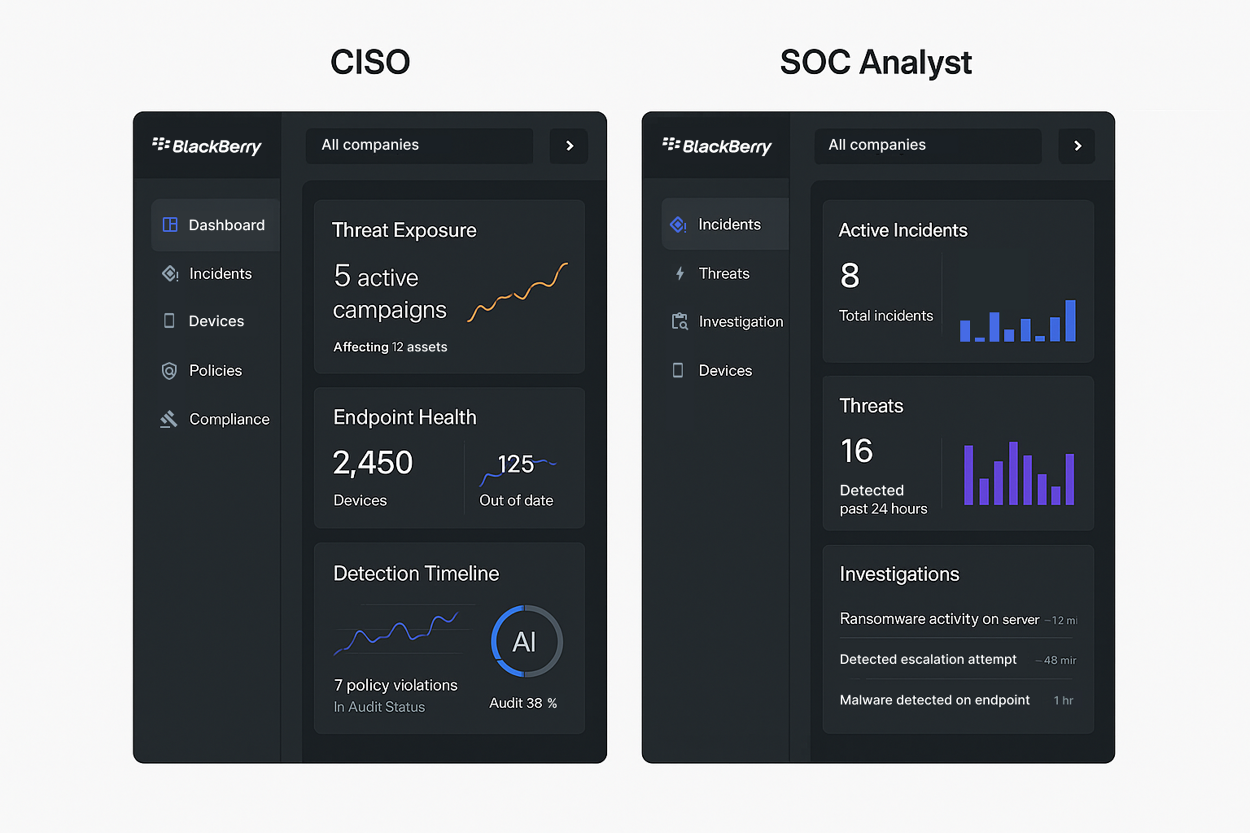
The dashboard stopped being a collection of widgets and became a structured exposure model: active campaigns, affected devices, endpoint health, detection confidence.
The goal moved from “see alerts” to understand exposure posture at a glance.
That reframing is what let one surface serve both an executive and an operator, because posture is legible at both altitudes in a way that a list of alerts is not.
06 · Dashboards as infrastructure
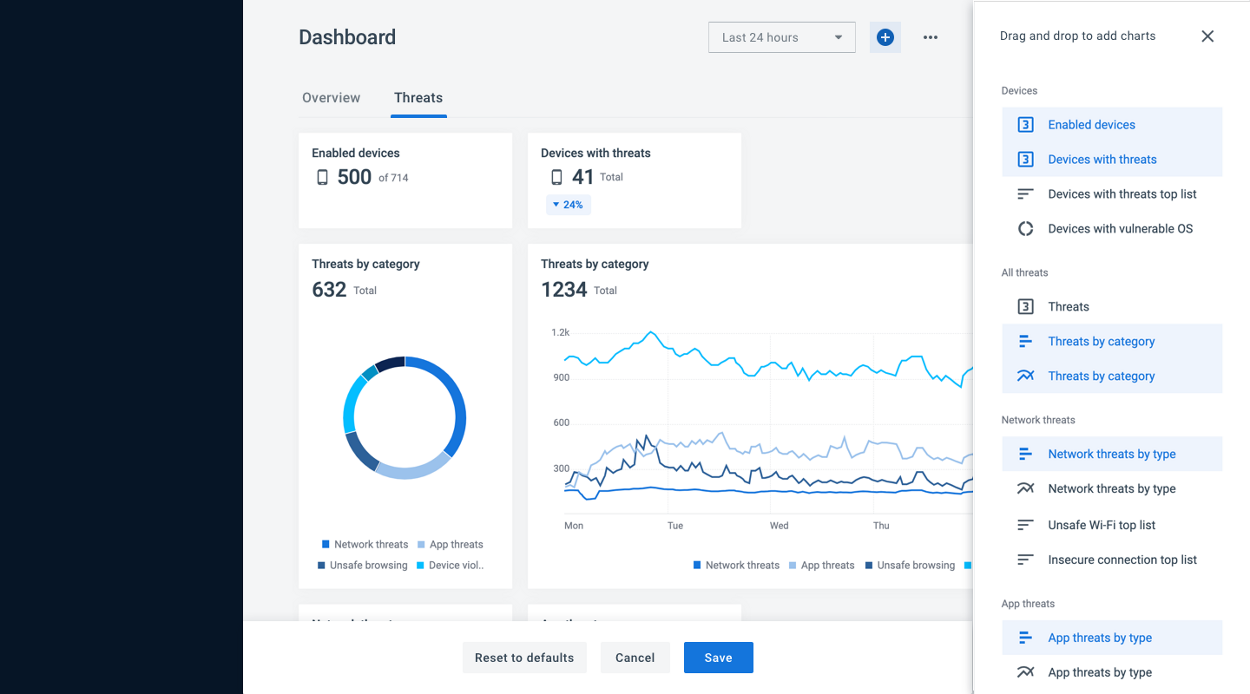
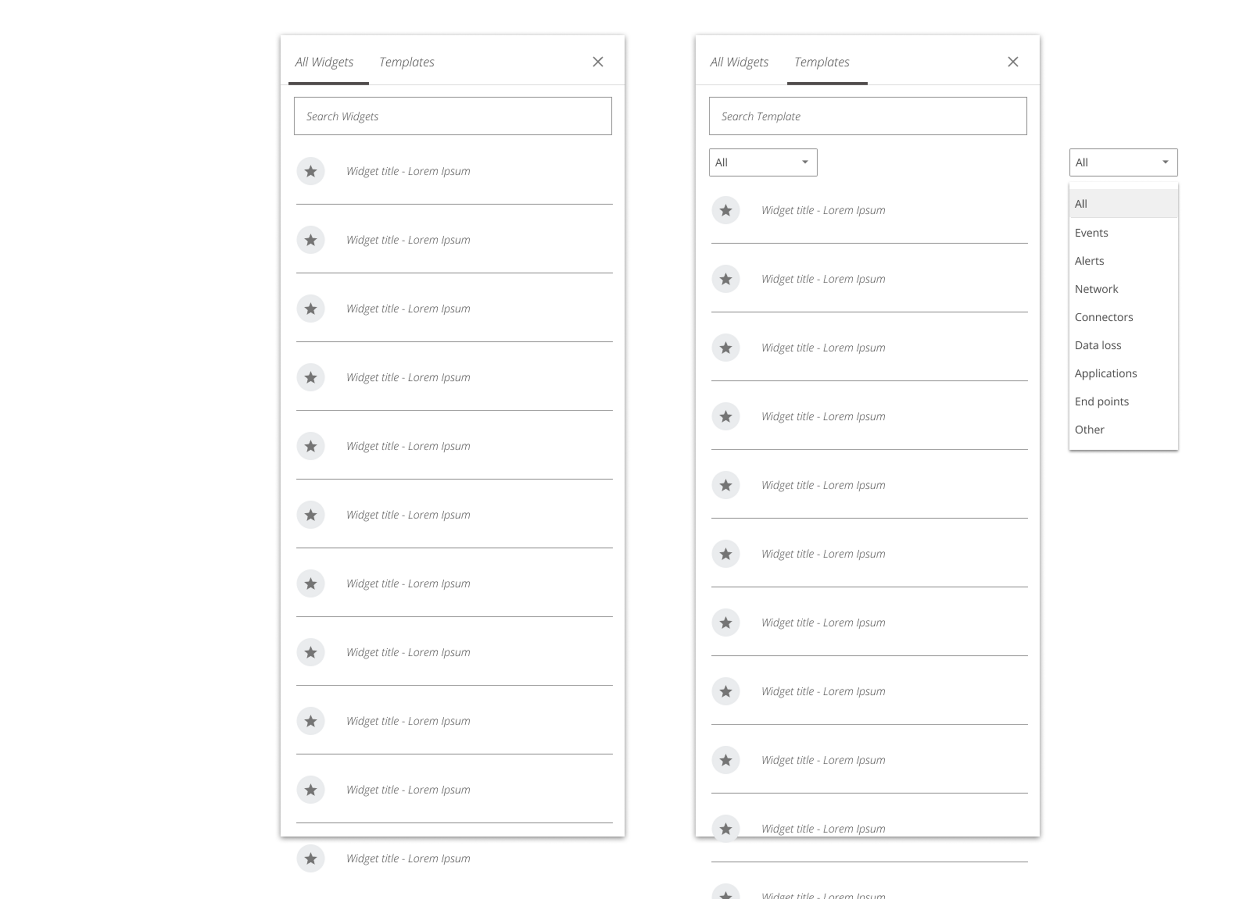
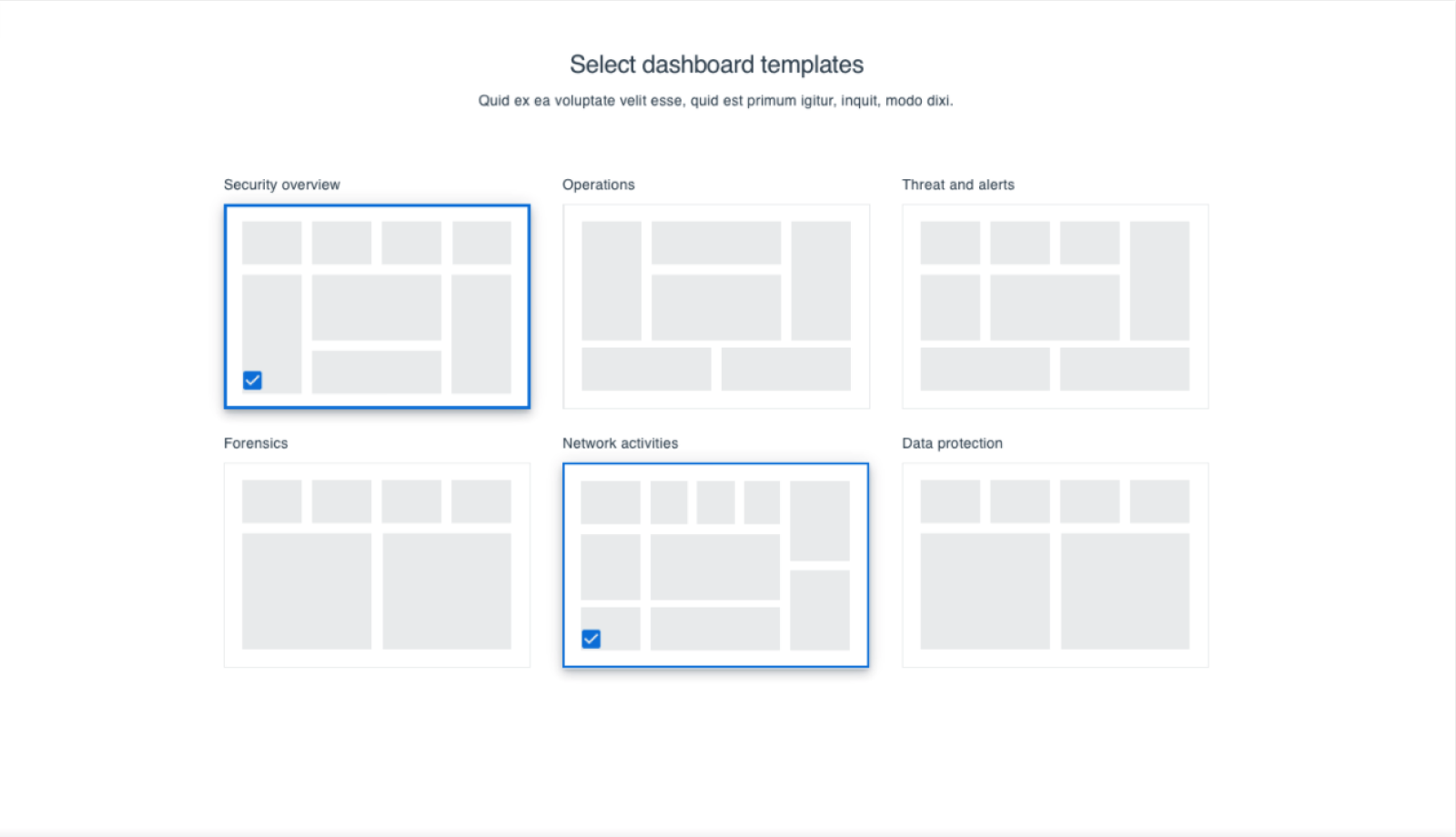
To scale across enterprises, dashboards had to be composable rather than authored. Modular widget architecture, drag-and-drop composition, KPI-driven layout, and deep links from a metric into the investigation behind it. Then, predictably, configurability produced duplication, so the registry had to be governed.
07 · Alert intelligence
The problem
High-volume alert streams were compressing analyst capacity. Triage at the level of the individual alert does not scale, because a single campaign generates hundreds of them and each one arrives looking like new work.
The shift
We moved from alert-level triage to incident-level intelligence: AI-based clustering, MITRE lifecycle mapping, a high-density triage layout, and containment actions inline.
Fewer duplicate investigations, faster prioritization, and, because the clustering showed its lifecycle reasoning, more trust in automated findings.
08 · Relationship-driven investigation
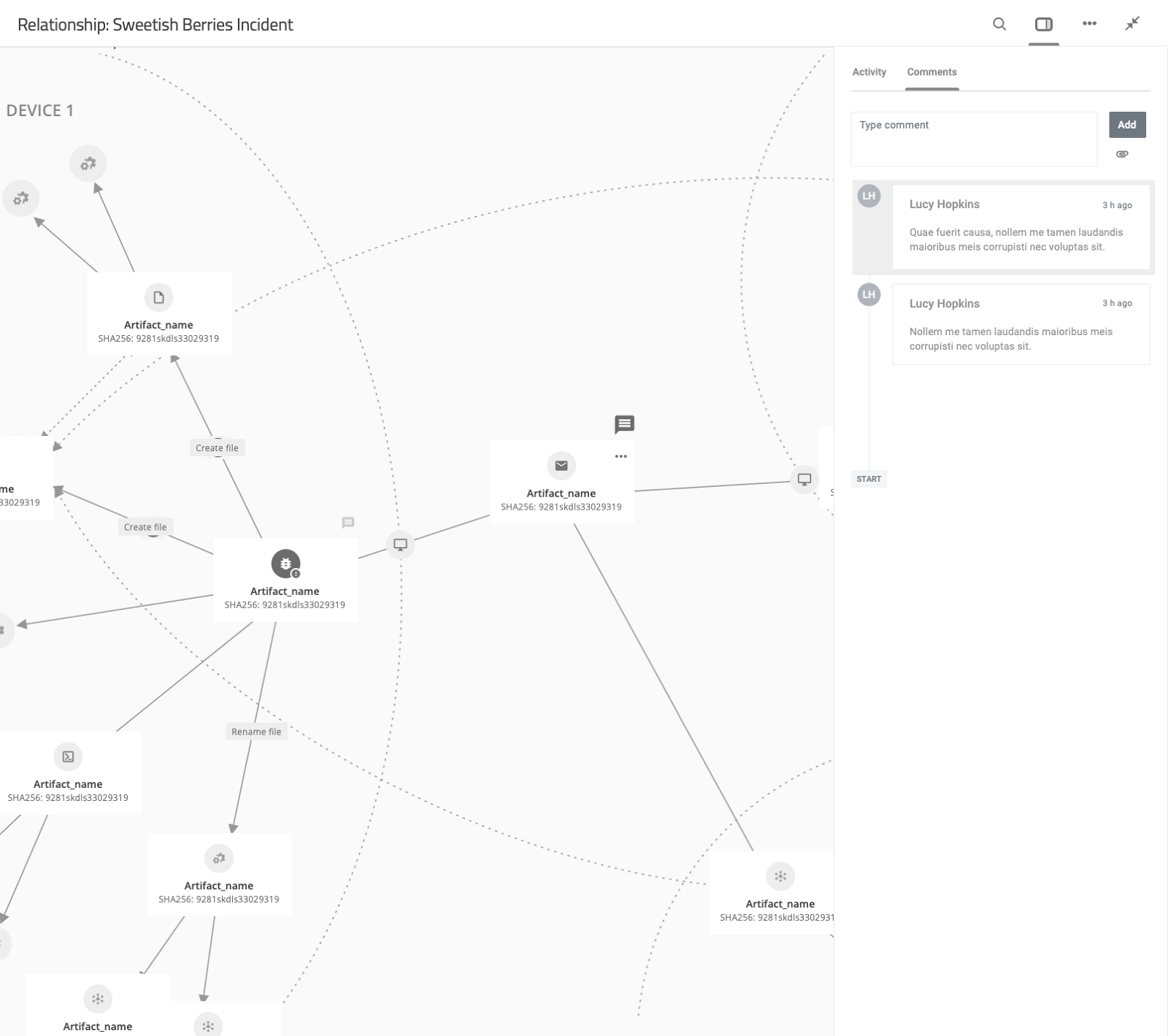
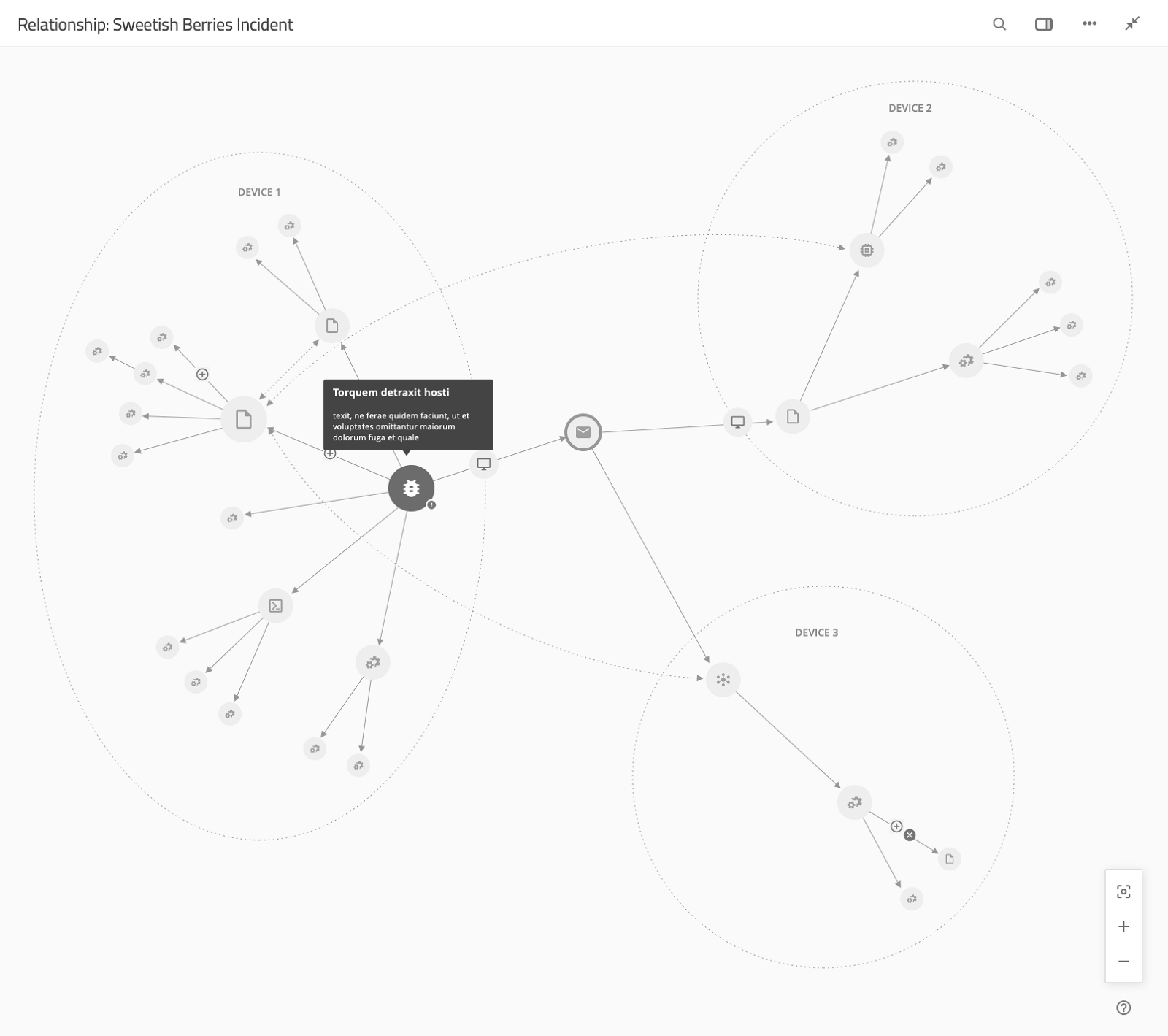
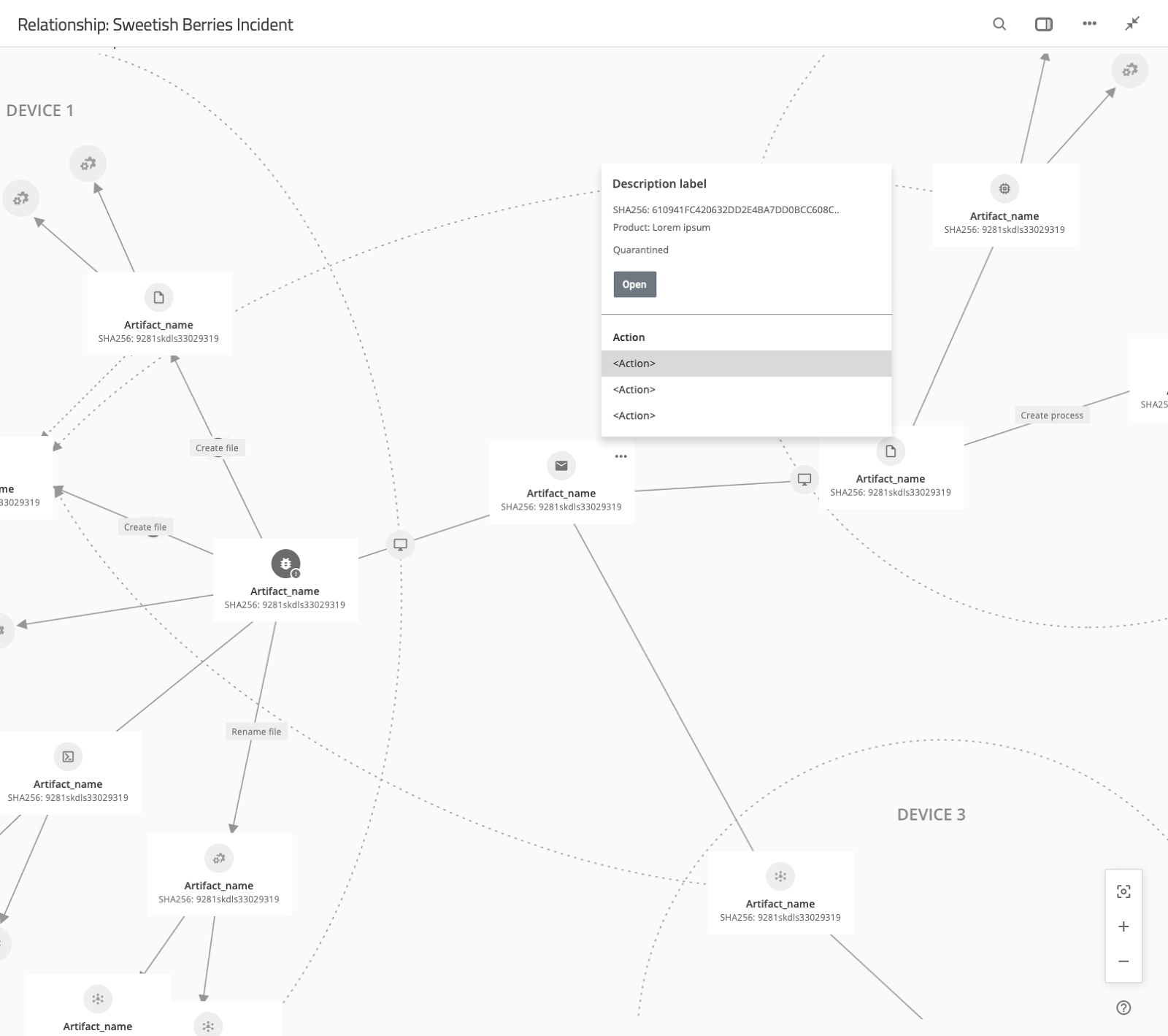
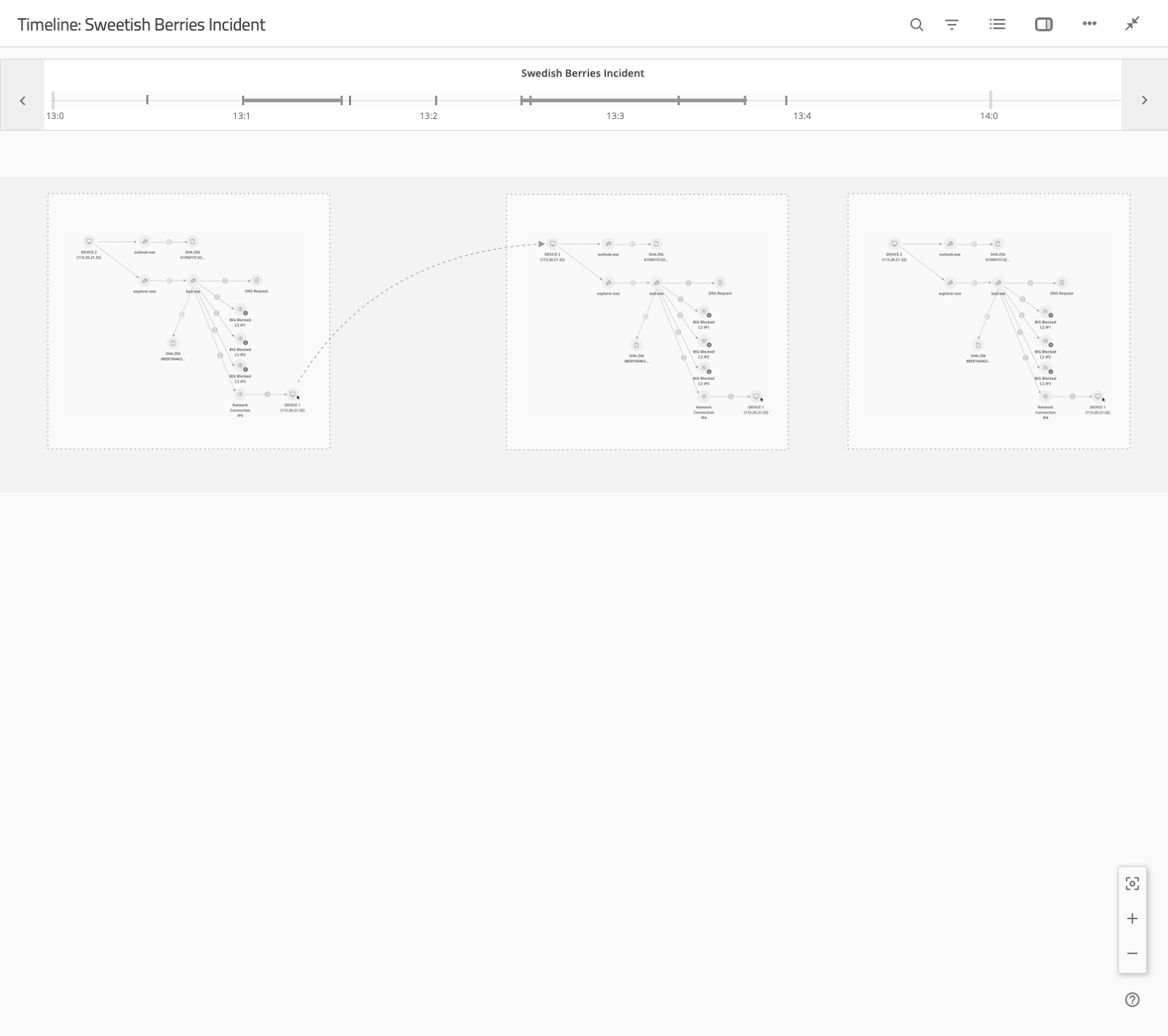
Security incidents are systems of relationships, and a table cannot represent propagation. So the investigation surface carried two modes, deliberately: a graph for structural reasoning, a timeline for causal reasoning.
Together they cut the reconstruction an analyst previously did in their head.
09 · Measured
pilot 37% faster
incident-level clustering down 28%
after role templates and composition 3×
governed registry eliminated
Mean time to detect is the number that matters, because it is the one the fragmentation was inflating. Analysts were correlating across consoles manually, so every minute of that was detection time an attacker kept.
10 · Takeaways
Trade-offs
Four consoles made the analyst the integration layer. That was the bug.