 Shafeen Alam
Four designers nobody was using
Chegg was the first team I managed. I got it during a re-org that cost us our Head of Design, by formally applying and interviewing for it like an outside candidate. What I inherited was four designers in Ukraine being used as a production queue. Most of what follows is what happened once they stopped being treated that way.
The company had just lost its design lead, and a team treated as a production queue rarely does its best work.
60-second read
A consultant review cost us our Head of Design and put everyone under evaluation. The team I would inherit was four designers in Ukraine, treated as a production queue rather than as designers.
Change how they were regarded before changing anything else. Then rebuild the day around a nine hour time difference so the work never sat still.
Formally applied for the role during the re-org and won it. Rebuilt how the team worked, wrote the first real career ladders, and became design's voice with product and the executive team.
Roughly 50% more output from the offshore team, a designer promoted to Senior within six months, and a second vertical handed to me five months later.
Jump to
01 · Shipped
A functioning distributed team, real career ladders, a hiring process that stopped losing people, and design in the room when strategy was set.
02 · How I got the job
I joined Chegg in 2013 as a Senior UX Designer, hired for Android expertise to support a planned app. It was pre-IPO consumer EdTech serving college students, and it went public that November.
In July 2014 an outside consultant was brought in to evaluate how effective the design function was. We lost our Head of Design as part of that process, and everyone was reevaluated.
The application
A role opened to lead a newly formed 0 to 1 market, high school, and I had to formally apply for it. Five recommendations from people inside the company, then four stages of interviews.
I got it, and immediately lost one of the designers I was going to manage. That is what a re-org is. You win the argument and the budget still moves.
Two years, four titles
03 · The team I inherited
Four designers in Ukraine, and nobody was using them properly. They were handed production work, which is a reliable way to guarantee you get production work back. I changed the workflow and got roughly fifty percent more out of the team without adding a single person.
The most important change was not a process change. I stopped regarding them as production designers and started treating them as members of the team, because they were.
Clear takeaways
Every session ended with what was decided and what happened next, written down. Ambiguity is expensive at any distance and ruinous at nine hours.
Delegation by skillset
I prioritized and assigned by what each person was actually good at, rather than handing out whatever was next in the queue.
Quarterly evaluations
Not required of me for an offshore team. I did them anyway, because a person with no review has no path.
Patience, and confidence
Most of the gain was not process. It was four capable designers being told, credibly, that they were part of the team.
04 · Continuous design
A nine hour gap between Santa Clara and Ukraine is either a problem or a second shift. I built the day so the work never sat still: a sync at the start of their day, which was our previous evening, and a check-in at the start of ours, which was their late afternoon.
Files moved through Dropbox, so whatever they finished we could pick up and keep going. Design ran nearly around the clock without anybody working longer.
Small decisions that mattered
Skype for calls and chat, chosen specifically because internet reliability offshore made anything heavier a liability. The best tool is the one that works on a bad connection.
And I migrated the team off Adobe Fireworks onto Sketch, so we were finally working in the same file format as everyone else.
05 · Becoming design's voice
Design does not get influence by asking for it. It gets influence by being present where decisions are already being made, reliably, over months.
The three legged stool
Constant contact with my product and engineering counterparts, on the premise that any one of the three of us alone is just an opinion. I set strategic objectives and carried the UX vision into their language.
A seat with the CPO
A bi-weekly sync with the Chief Product Officer on strategy and alignment, plus weekly one-on-ones with product managers and engineering leaders. Eventually I was presenting the vision to executives for concept approval.
Research, kept close
I pushed hard on discovery and testing, helped shape the research roadmap, and had both user researchers dotted-line report to me so research and design were never negotiating across a boundary.
Beyond my own team
I sat in a UX Leadership Meeting with three other managers on initiatives spanning the whole function, and ran a Mobile Design Bootcamp workshop to get mobile best practices and tooling into the wider Chegg design team. My mandate was one vertical. The craft problem was company-wide.
06 · Fixing how we hired
We were losing good candidates to our own process rather than to competitors, which is an embarrassing way to lose. So I rebuilt it.
- Reached out to candidates directly rather than routing everything through an internal recruiter.
- Wrote email templates for first contact and follow-up, so nobody sat waiting on me to find the words.
- Screened by video call, and chose to have more first conversations rather than writing people off on paper.
- Kept every stage moving on time, because a slow process loses the strongest candidates first.
- Published a concise interview schedule and was transparent about it from the first email.
07 · How people grew
Ladders and levels
The existing requirements were dated and keyed almost entirely to years of experience, which is a way of avoiding the judgment rather than making it. I wrote formal designer career ladders instead, and replaced role metrics that had been inherited from the engineering organization.
Within my first six months I coached a designer through to a Senior promotion.
One-on-ones, outside
I never held them in a closed room. We walked. People say things on a walk that they will not say across a table, and the conversation stops feeling like an assessment.
The content was explicit and actionable: clear milestones, named gaps, and both the hard and the soft skills, because the second set decides whether the first ever gets used.
08 · Culture, deliberately
None of this was perks. It was the work of making a group of people comfortable enough with each other to say the difficult thing in a critique.
Lunch, together
Catered so we would eat in the same room. Sometimes we talked about work. Mostly we did not. On busy days we carried it into a working session.
A funny video first
Every team meeting opened on a softer note. It sounds trivial. It is the cheapest way to make a room willing to disagree with you.
Skateboards
Our standing escape. We would grab boards and get out of the building together.
09 · What it added up to
Five months into the management role I was given a second vertical, Career Services, and promoted again. By the end I had three: Admissions, Careers, and Enrollment Services, the business to business side.
What the team shipped
10 · The last day
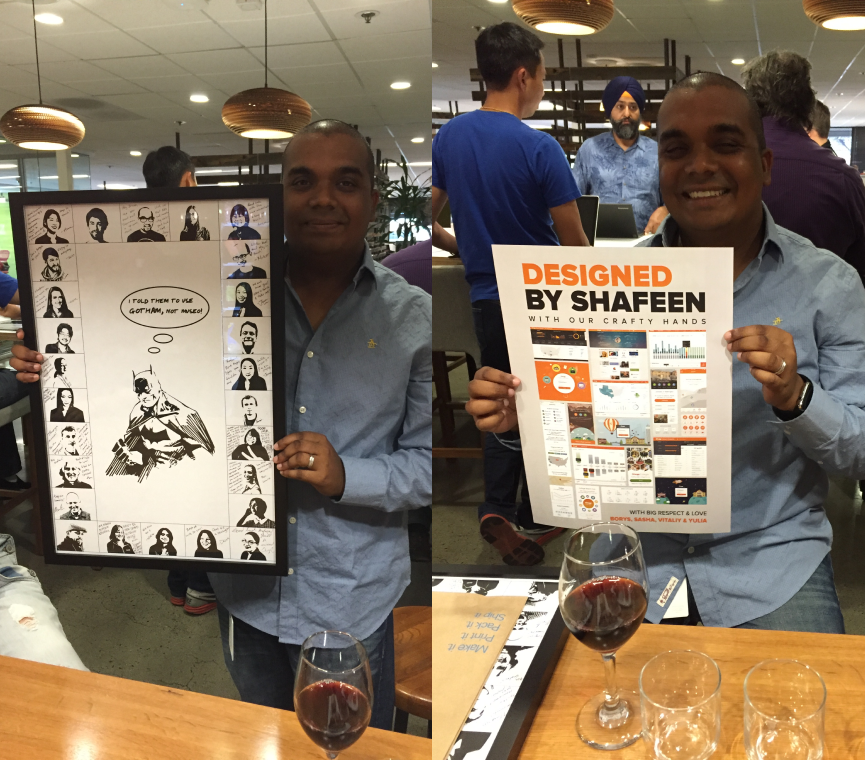
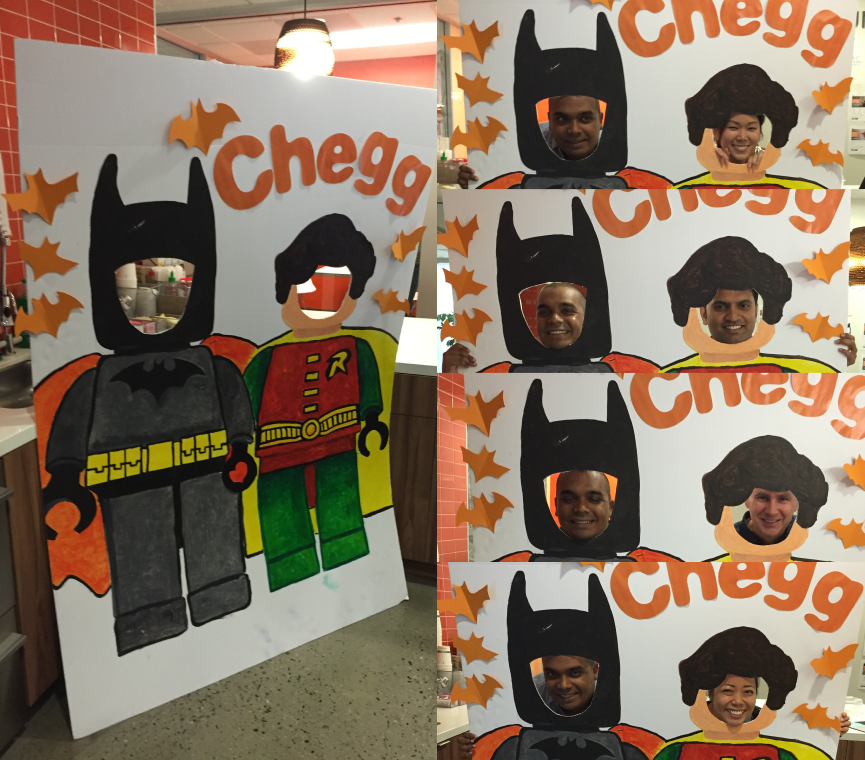
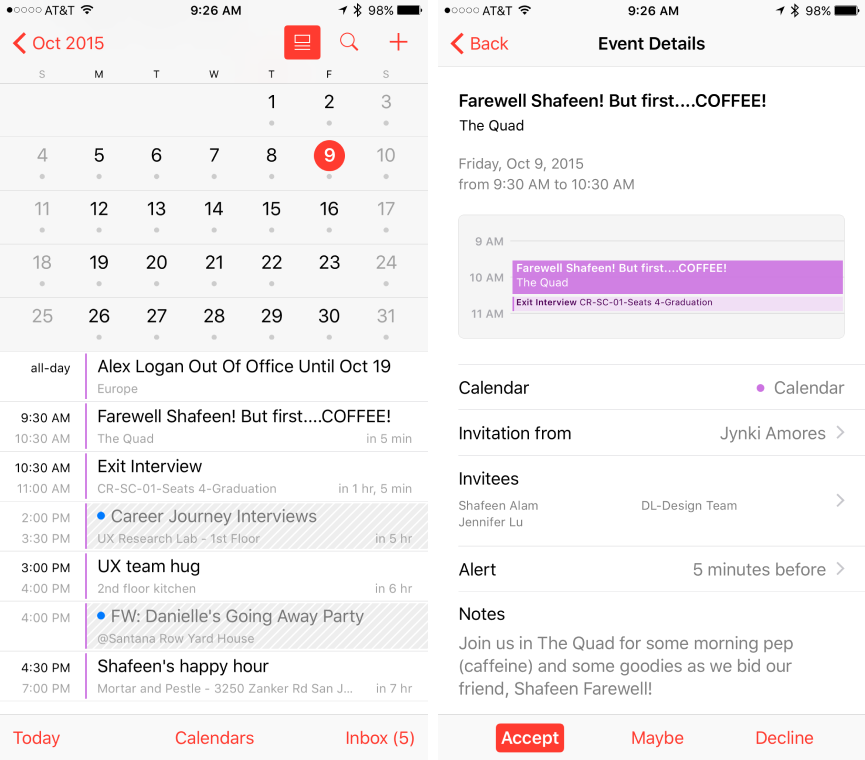
I include this because it is the only kind of evidence about leadership that cannot be written by the leader. Everything above is my account of what I did. This is what the team did back.
11 · What changed
from workflow and regard, not headcount +50%
to Senior, within my first six months 1
Admissions, Careers, Enrollment Services 3
so research and design stayed close 2
The fifty percent is the number I would defend, because of where it came from. No new headcount, no new budget, no new tools beyond Sketch and Skype. Four people who were already good, managed as though they were.
One of the designers from this period, Anna Phan, now works in design leadership at Google. Her recommendation is on the Leadership page.
12 · Takeaways
Call a team production designers and you will get production work. That is not a talent problem.